
Precision Over Volume: The New Calculus of Retail Real Estate
Retail expansion hasn’t stalled—it’s evolved. In an era shaped by tariff volatility, rising occupancy costs, and supply chain complexity, the most successful retailers are replacing rapid growth with surgical precision, leveraging richer data and tighter operational criteria to open fewer—but far better—stores.

What’s changed is the approach.
Retailers today are scrutinizing every potential location more carefully than ever before. Site selection, occupancy costs, supply chain considerations, and competitive dynamics are all receiving greater attention as operators seek to maximize return on investment and minimize risk.
The result is a new era of retail real estate—one defined less by rapid expansion and more by strategic expansion.
The Numbers Behind Today’s Expansion Decisions
According to Coresight Research., the U.S. retail landscape is showing signs of stabilization in 2026, with store openings on the rise and closures trending downward. The firm projects approximately 5,500 new store openings — a 4.4% year-over-year increase — while closures are expected to fall 4.5% to around 7,900 locations, the lowest count in three years.
Value retailers are a key force behind this shift, as consumers continue to gravitate toward affordability and convenience. Chains like Dollar General, Aldi, and Tractor Supply are leading expansion efforts, strategically opening new locations to meet growing demand. This disciplined, targeted approach to growth reflects a broader recalibration in retail real estate — one where quality and positioning matter more than sheer volume, pointing to a more resilient and strategically grounded retail environment ahead.
Tariff Uncertainty Is Reshaping Expansion Decisions
One of the biggest challenges retailers face today is uncertainty.

Tariffs and shifting trade policies continue to impact the cost of merchandise, store fixtures, equipment, and construction materials. These variables can significantly alter the projected economics of a new store and make long-term planning more difficult.
As a result, retailers are evaluating expansion opportunities with greater scrutiny. Markets that may have looked attractive under one cost scenario can quickly become less appealing if import costs rise or supply chain disruptions affect inventory flow.
Rather than pursuing growth for growth’s sake, many retailers are prioritizing flexibility, speed to market, and locations that offer stronger long-term economics.
For retailers operating on thin margins, disciplined expansion has become a necessity rather than a choice.
Occupancy Costs Matter More Than Ever
Rent has always been a critical component of location strategy, but today’s retailers are increasingly focused on total occupancy costs.
Common area maintenance expenses, insurance, taxes, utilities, labor costs, and future operating expense increases can all materially impact store profitability.
This has changed the dynamic of lease negotiations. Retailers are spending more time evaluating escalation clauses, expense pass-throughs, renewal options, co-tenancy provisions, and other lease terms that affect long-term financial performance.
For shopping center owners, transparency and flexibility have become competitive advantages. Tenants want a clearer understanding of how occupancy costs may evolve throughout the lease term and how those costs could impact store economics over time.
Supply Chain Considerations Continue to Influence Growth
Although supply chain conditions have improved compared with the disruptions of recent years, operational uncertainty remains a significant concern.
Retailers must consider inventory availability, transportation costs, vendor reliability, and distribution network efficiency when evaluating expansion opportunities.
A great location can quickly become a problematic one if inventory cannot reliably reach the store or if supply disruptions prevent retailers from meeting customer demand during critical selling periods.
For this reason, many companies are evaluating expansion opportunities through both a real estate lens and an operational lens. Markets with strong logistics infrastructure and proximity to distribution networks often receive greater attention than they might have in previous expansion cycles.
Retail Site Selection Has Become More Strategic
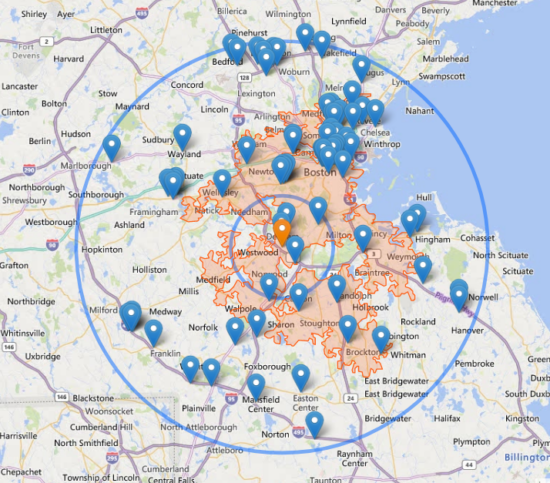 The days of relying solely on traffic counts and demographic reports are fading.
Today’s retailers are taking a much broader view of market potential. In addition to population density and household income, they are evaluating factors such as:
- Competitive positioning
- Consumer migration patterns
- Local employment trends
- Tenant adjacencies
- Labor availability
- Market saturation
- Long-term growth potential
The goal is no longer simply to open more stores. The goal is to open the right stores.
This shift has led retailers to focus on markets that demonstrate resilient consumer demand, favorable economic fundamentals, and strong long-term growth prospects.
Expansion Is Increasingly Driven by Better Data
One of the most significant changes in retail real estate isn’t the number of stores opening or closing—it’s how expansion decisions are being made.
Today’s retailers are evaluating far more than demographics and traffic counts. They are analyzing competitive landscapes, tenant mix synergies, trade-area dynamics, occupancy costs, and long-term market viability before committing capital.
That shift has increased demand for comprehensive market intelligence.
For retailers, landlords, brokers, and investors, access to accurate shopping center and tenant data has become a critical component of the decision-making process.
Better information can help stakeholders identify opportunities, evaluate competitive environments, reduce risk, and accelerate decision-making.
This is where the information available through DMM and ShoppingCenters.com can provide meaningful value.
By offering visibility into shopping center inventories, tenant rosters, ownership information, leasing contacts, and market activity, these platforms help industry professionals evaluate opportunities more efficiently and gain a deeper understanding of the markets they are targeting.
Rather than relying on fragmented information collected from multiple sources, users can access a more complete picture of retail real estate opportunities and make more informed expansion, leasing, and investment decisions.
What This Means for Shopping Center Owners and Investors
The same market intelligence that retailers use to reduce expansion risk is becoming increasingly valuable for owners, developers, brokers, and investors.
Understanding which retailers are actively growing, which categories are driving new store openings, and which markets continue to attract investment can help property owners refine leasing strategies and position assets more effectively.
Investors are similarly focusing on fundamentals rather than simply chasing yields. Centers anchored by grocery stores, value retailers, service providers, healthcare tenants, and experiential concepts continue to draw considerable attention because of their ability to generate stable traffic and resilient cash flow.
As expansion becomes more targeted, understanding market dynamics may provide as much value as traditional financial analysis.
Retail expansion is far from dead.
If anything, the sector is entering a new era of precision growth. Thousands of stores continue to open each year, but successful expansion is increasingly driven by careful planning, rigorous analysis, and disciplined execution.
Tariffs, inflation, occupancy costs, and economic uncertainty have raised the stakes for every real estate decision. As a result, retailers are becoming more selective, landlords are becoming more strategic, and investors are placing greater emphasis on market fundamentals.
The organizations that succeed won’t necessarily be those opening the most stores. They’ll be the ones identifying the right opportunities, in the right markets, at the right time.
The takeaway: Retailers are still expanding—just more carefully. And in today’s environment, careful expansion may be the smartest growth strategy of all.
Related Articles:
- Release Notes : July 2026 DMM shopping center and tenant data
- DMM Data on the Esri ArcGIS geospatial platform
- Optimizing Retail Property Analysis: The Power of Front-Facing NAICS Codes and Anchor Data
- GeoAI Retail’s Strategic Advantage in GIS: What 2026 Holds
Keywords: #Retail, #Tenants, #ShoppingCenters, #Tariffs,, #Brick=and-Mortar, #retail expansion, #site selection, #occupancy costs, #supply chain, #store openings, #market intelligence, retail real estate, #tenant data

Tama J Shor, Founder & President of Directory of Major Malls / ShoppingCenters.com
With nearly 40 years of experience in retail research and shopping center industry analysis, Tama has expanded DMM’s portfolio from legacy print products to comprehensive digital solutions including online platforms, custom reporting, data licensing, mobile/geospatial analytics, AI and Esri platform integration. Her expertise has established DMM as a leading retail data source for industry, finance, media, academic, and government sectors. Connect with Tama on LinkedIn.