
By: Tim Donovan, Director of Sales & Operations, KevaWorks
Specialty leasing has always lived in the space between experimentation and necessity, a place where creativity, speed, and opportunistic thinking often mattered more than square footage totals or long-term commitments. But over the past five years, what used to be treated as “ancillary” has rapidly repositioned itself as a core component of property revenue strategy.
Today, specialty leasing is no longer just a way to fill gaps. It has become a testing ground for emerging retail concepts, a bridge between digital and physical commerce, and, in many portfolios, a driver of community connection and experiential engagement. The result is a sector that looks markedly different from the temporary kiosks and seasonal carts that once defined the category.
This evolution has given rise to what many in the industry are calling the new face of specialty leasing, a more strategic, data-informed, and partnership-driven era in flexible retail.
From Space-Filler to Strategy Builder
For decades, specialty leasing has often been reactive: fill the vacancy, place the cart, secure the holiday activation. That model still plays a role, but the priorities have shifted.
Today’s approach is:
- Proactive instead of reactive
- Experience-led instead of transaction-led
- Brand-partnered instead of vendor-driven
- Portfolio-integrated instead of property-by-property
This shift stems from several converging trends:
- Retailers Are Using Short-Term Space as a Low-Risk Testing Lab
National and regional brands increasingly view pop-ups as a strategic tool to test a new market, pilot a concept, launch a product, or drive omni-channel engagement. Flexible terms allow retailers to experiment without the overhead of traditional leases.
- Owners Are Leveraging Specialty Leasing to Drive Foot Traffic
Activations such as immersive art exhibits, regional craft markets, rotating food concepts, and wellness experiences often outperform traditional retail in terms of engagement per square foot. Shoppers crave novelty; specialty leasing is uniquely positioned to deliver it.
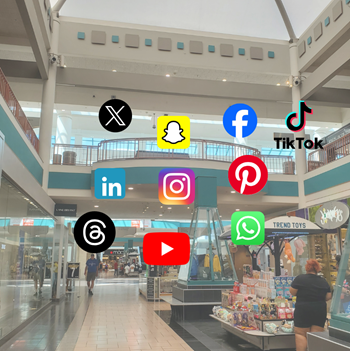
- Social Media Has Become a Tenant Funnel
TikTok entrepreneurs, Instagram businesses, and micro-brands are discovering brick-and-mortar through specialty leasing. The pipeline for short-term tenants has broadened dramatically, and leasing teams are increasingly using digital channels to attract them.
- Revenue Diversification Is Now a Portfolio Imperative
As centers adjust to fluctuating occupancy cycles and shifts in lease structures, short-term activations provide a reliable supplement to long-term revenue. But more than that, they create resilience: diverse tenancy mixes strengthen the entire ecosystem.
A New Skill Set for a New Era
The rise of flexible retail is not just changing who is renting space, it’s changing the role of the professionals who operate it. What specialty leasing managers handle today looks different than it did even a decade ago.
Many now juggle:
- Curating experiences, not just tenants
- Managing social and digital lead pipelines
- Coordinating with marketing teams on placemaking
- Negotiating custom agreements and hybrid structures
- Building relationships with event agencies, touring activations, and mobile brands
- Working with data platforms and analytics
- Balancing short-term goals with long-term tenancy strategy
The modern specialty leasing professional is equal parts salesperson, marketer, curator, and portfolio strategist.
Flexible Retail Is Becoming More Sophisticated and More Collaborative
Historically, specialty leasing and permanent leasing sometimes operated in parallel rather than partnership. Today the pendulum swung. Many of the industry’s most effective programs operate as integrated teams that collaborate on portfolio vision, merchandising strategy, and brand recruitment.
This collaboration is particularly valuable when short-term tenants evolve into long-term leases. Pop-ups have become the farm system of retail real estate where successful concepts “graduate” to permanent locations.
Owners and operators are increasingly documenting these conversions as measurable success stories. They aren’t just filling temporary space; they’re nurturing tomorrow’s tenants.
National Activations and Touring Experiences Are Reshaping Consumer Expectations
Another hallmark of the new specialty leasing landscape is the rise of touring attractions, experiential exhibits, and seasonal entertainment concepts. These offerings:
- Draw new demographics
- Extend length of stay
- Create social-media-friendly experiences
- Drive incremental revenue and parking utilization
- Offer “event-like” programming without the cost of hosting a true event
From immersive museums to technology-driven experiences to national festival-style pop-ups, these touring concepts are becoming a reliable layer in the merchandising mix.
And because they require coordination across properties and regions, they’re also reshaping how owners think about portfolio-wide planning.

Technology Finally Has a Seat at the Table
Another major shift: many companies are now investing directly in specialty-leasing tech tools, CRM systems, inbound lead management platforms, inventory mapping tools, and analytics dashboards.
The impact is significant:
- Faster tenant onboarding
- Better forecasting
- Streamlined approvals
- Increased conversion rates
- Clearer visibility into revenue potential
This growing tech infrastructure reflects an acknowledgment that specialty leasing is not just opportunistic revenue, it’s structured revenue.
Where the Industry Conversation Is Headed
As the specialty leasing ecosystem grows more complex, the industry is hungry for spaces to share best practices, discuss emerging trends, and benchmark strategies.
Conferences and peer-round tables that focus on flexible retail have become increasingly relevant. One example is the Flex Retail Summit, a new event dedicated specifically to short-term retail, specialty leasing, and activations. While still young, the Summit reflects the industry’s recognition that flexible retail is no longer a secondary category, it’s an essential revenue stream requiring dedicated expertise.
For teams interested in staying connected to the conversation, the event details are available at: www.FlexRetailSummit.com
But the broader takeaway is this: the specialty leasing discipline is maturing, and the industry is formalizing the tools, training, and infrastructure needed to support it.
Looking Ahead: What the “New Face” Means for Shopping Centers
Flexible retail is not a temporary trend born out of necessity; it is a long-term shift that aligns with how brands operate, how consumers shop, and how properties generate revenue.
The next chapter of specialty leasing will likely see:
- Even deeper integration with digital marketing
- Stronger emphasis on local entrepreneurship
- Continued rise of touring experiences and event-based activations
- Enhanced analytics around occupancy, conversion, and ROI
- New lease structures blending retail, entertainment, and sponsorship
- Greater collaboration between leasing, marketing, and property management
- A more formalized, strategic identity for the specialty leasing profession
In short, the category is stepping into a new era one where flexibility is not a fallback, but a forward strategy.
Related Articles
Keywords: #Retail #SpecialtyLeasing #SocialMedia #Shopping #Consumers #PopUpRetail #ExperientialRetail #short-term-Leasing #FlexRetail

Tim Donovan, Director of Sales & Operations of KevaWorks
Tim Donovan is a veteran sales and operations executive with more than 30 years of experience in specialty leasing and retail program development. He currently serves as Director of Sales and Operations at KevaWorks LLC, leading national sales strategy, operations, and program execution.
Prior to KevaWorks, Tim spent 18 years with CTM Group Inc., where he served as Vice President of Sales and Customer Service and helped guide the company through the COVID-19 pandemic and recovery. He began his career at Foto Fantasy in several sales leadership roles. In 2017, he received the ICSC Hall of Fame Outstanding Specialty Retailer Award for his industry contributions. Connect with Tim on LinkedIn.